Go to Blogger edit html and find these sentences.Now replace these sentences with your own descriptions.This theme is Bloggerized by Lasantha Bandara - Premiumbloggertemplates.com.
Go to Blogger edit html and find these sentences.Now replace these sentences with your own descriptions.This theme is Bloggerized by Lasantha Bandara - Premiumbloggertemplates.com.
Go to Blogger edit html and find these sentences.Now replace these sentences with your own descriptions.This theme is Bloggerized by Lasantha Bandara - Premiumbloggertemplates.com.
Go to Blogger edit html and find these sentences.Now replace these sentences with your own descriptions.This theme is Bloggerized by Lasantha Bandara - Premiumbloggertemplates.com.
Google's official position on webmaster best practices really hasn't
changed much over the years. What has changed is the search engine's
ability to enforce these guidelines through improved algorithms. The
implementation of Panda, Penguin, and Hummingbird has had a profound
impact on the SEO landscape.
Google's Matt Cutts has remarked that no one should be surprised when
a website that hasn't followed the guidelines is penalized. What Cutts
overlooks or chooses to ignore is something that I have dubbed the "Google Paradox".
I suspect the Google paradox is the root cause for one black hat forum
member expressing his desire to "punch Matt Cutts in the face" (per Cutts' Pubcon 2013 keynote).
In order to reach the top of the SERPs and stay there in
2013 and beyond, your website must deserve to be there. It needs to be
the best in class. It must offer the best user experience in that niche.
Fortunately, there are a number of free tools that can help you achieve
that goal.
Keyword Research
Developing the right list of keywords remains a staple of SEO, even
in 2013. Because the keyword selection has such a profound impact on the
overall performance of a website, the keyword selection process
shouldn't rely on a single tool.
1. Wordstream
The Wordstream Free Keyword Tool
offers thousands of keyword ideas from a huge database of more than a
trillion unique searches. This tool outperforms some of the paid
alternatives in the market.
2. Keyword Eye Basic
Keyword Eye Basic is a visual keyword suggestion tool, that works particularly well for brainstorming sessions.
3. YouTube Keyword Tool
Julie Joyce recently described in detail just how great the YouTube Keyword Tool is for keyword research for all kinds of content, not just video.
4. Übersuggest
Übersuggest utilizes the "Suggest" data from Google and others. A terrific tool for developing long-tail phrases.
Content Tools
Everyone knows by now that Panda ushered in a new era for content
quality. No longer will cheap, spun, or duplicate content frequently
find its way to the top of the SERPs. These tools will help you with
your content development
5. Anchor Text Over Optimization Tool
The Anchor Text Over Optimization Tool outputs anchor text diversity. Words or phrases that are potentially over-optimized are highlighted for manual review.
6. Convert Word Documents to Clean HTML
Convert Word Documents to Clean HTML is a free converter tool for documents created in Microsoft Word, Writer, and other word processing software.
7. Copyscape
Copyscape is a
free plagiarism checker. The software lets you enter a URL to detect
duplicate content and to verify that your content is original.
Technical Tools
Don't let the title scare you away. These are technical tools designed to be used by the non-technical among us.
8. Xenu's Link Sleuth
Xenu's Link Sleuth
is a PC based spidering software that checks websites for broken links.
It performs validation of text links, frames, images, local image maps,
and backgrounds.
9. Robots.txt Generator
Robots.txt Generator is a freeware utility that makes the creation of robots.txt files a breeze.
10. Robots.txt Checker
Robots.txt Checker is a "validator" that will analyze the syntax of a robots.txt file to verify the format is valid.
11. URI Valet
Use the URI Valet Header Checker
to view total number of objects (http requests), time to download,
object details, document internal links, and external links along with
verifying server headers for each.
12. Title and Description Optimization Tool
This title and description optimization tool
gives insight as to what the top ranking competitors are using for
titles and descriptions. The best competitor intelligence tool of its
type.
13. Image SEO Tool
With Image SEO Tool,
simply input a URL and this tool checks image name, alt attribute, and
dimensions. Alerts are given if a potential problem is discovered.
14. Schema Creator
The Schema Creator tool is the easiest way to get started creating HTML with schema.org microdata.
15. Google Snippet Preview
The snippet that appears in Google Search is usually taken from these meta tags. The Google Snippet Preview tool helps visualize and optimize what is displayed to searchers.
Fiddler is a web debugging tool which logs all HTTP(S) traffic between your computer and the Internet.
21. Microsoft Free SEO Toolkit
Now that you have run each of these tools over your website, it's
time to run a full blown SEO audit, complete with detailed reports.
Fortunately, Microsoft has created a Free SEO Toolkit which does just that. What are some of your favorite tools for on page optimization? Source:http://goo.gl/RNr7NL
Search Engine Optimization in 2014 is too complex for beginners so they must need to follow some Best SEO Tips and Tricks that will boost their Website ranking better in modern Search Engines.
So here we are going to see some Basic and Intermediate SEO Tips and Tricks that helps to improve your website ranking in Search Engine Results Page.
Most of bloggers using Wordpress so we recommend to use top wordpress SEO Plugins
Tips and Techniques for Keyword Analysis
The Below list will help to improve the Keyword Analysis better.
Use Google Keyword Planner
Find Less Competitive Keywords with high search Volume
Choose Key phrases
List out Relative Keywords by relevance
Google Keyword Planner - Google Keyword Planner is
the free SEO tool that is provided by Google and it helps to find out
the Keywords search volume and relative Keyword ideas for you. Useful
tool compare with other keyword analysis tool because Google is the top
Search Engine used by people so it's worth to use this tool. See this 8 Free Google SEO Tools that help to Optimize your website
Less Competitive Keyword with high Search Volume -
Finding this one is crucial part of SEO because if you find out this
Keyword then you can get high search visitors. More competitor's means
ranking high is also too much tough. So find out less completive
Keywords.
Choose Key Phrases - Rather than selecting a single
Keyword it's better chance to ranking more than one keyword if you
chosen Key Phrases. So select Key phrases that works better compare to
keywords.
Interesting and Descriptive article - No one is
going to like boring long articles so write your content interest to
read and descriptive content that will clear all things about the
article title.
Quality of the Content - Don't copy Paste whole
content from the other website that never going to bring you traffic.
Google has very good eye to find out the Duplicate contents. Avoid
Keyword stuffing and other Black-hat SEO tricks.
Shot and Sweet Title - Title must be relative and
the Key phrase Keywords must be present in the Title. And in length is
better to keep it between 40 to 65 Characters. And read more Tips to Title Tag Optimization.
Relative Meta Description - Writ a short and sweet
156 Characters that will explain your whole story of the article will
help to know better in Search Engines Results Page.
Optimal Keyword Density Ratio - Maintain your Keyword Density in the Safe manner to not getting Google Algorithm Penalties.
SEO Friendly URL - Url of the content must be
meaning full to the content. Then search Engine highlight the Url
Keywords also it's a boosting signal for the SEO.
Keyword in First Paragraph - Use the Keywords in First Paragraph so search Engines know this is the content really explains about the Title.
Use of Headings - Use prober headings tags h1, h2, etc... It will make readability easier and Nice Chapter wise content.
Focusing Keywords - Highlighting the Keyword with
strong or em tag will increase the visibility of the point you are
really want to reader by people also it's add some weight in SEO.
Image Optimization - One Image can explain everything better than long story content so add an image and Optimize image using proper Alt Tags.
Tips to improve Off-Page SEO
Use of Social Media
Quality Link Building
Use of Social Media - Use of Social Media not going
to build follow back links but it's a powerful source to deliver traffic
to the website. Traffic signal is also important factor in SEO so use
the social media to get traffic.
Quality Link Building - Don't build your Link too
much faster. Quantity of Back links that's not matter Quality will
Matter. So write your articles good and interesting then the Back link
will flow automatically to your content.
Useful SEO Tricks for 2014
Find LSI Keywords
Use LSI Keywords more
SEO Check Up
Find LSI Keywords - Find the Latent Semantic Indexing Keywords related to your keywords using different methods available in the internet.
Use LSI Keywords more - Rather than Keyword stuffing
the new idea use mixes it up LSI Keywords with Keywords as Keyword
Stuffing. Use it in all important On-Page SEO Factors.
SEO Check Up - Take SEO Check Up
and using different tools available in the Internet and improve the SEO
Score by fixing by the tips then you can get a better rank in SERP.
Add a Bookmark of this Page above Tricks will be updated in regular manner to maintain the Quality of the Article.
Necessaries of SEO Tips and Tricks in 2014
Competitive world everything will have some Guidelines and rules that
must we need to follow. So we need to follow this techniques to survive
our ranking in search Engines.
Always one thing we need to remember in SEO that is if we write
Unique and Good Articles that is interest to read for a user not for
search engines this is the one rule always survives you in SERP.
Hope this SEO Tips and Tricks will helps to boost your rank in Google in 2014.
It seems like Google has updated the local search results since the latest Google Pigeon update that was pushed out originally on on July 24th.
A WebmasterWorld
thread has some business owners and webmasters noticing the change, so I
checked to see my past coverage and compare the search results from
after Pigeon launched to today.
In my original story, I showed the search results for a search on [ice cream] and those results have indeed updated since:
Before:
After:
Also, I covered a weird issue with a search for [new york hotels] on Search Engine Land and those results have changed since as well:
Before:
After:
The webmaster in WebmasterWorld wrote:
Wondering
if anyone sees any type of rollback or update going on with respect to
Pigeon. Can't tell if this is a caching issue or just part of the entire
update continuing to roll out, resulting in some inconsistencies.
It does seem like there was an update of some sorts.
Forum discussion at WebmasterWorld.
Update: Google would not comment about this update and if there was an update to the algorithm.
▁▁▁▁▁▁▁▁▁▁▁▁▁▁▁▁▁▁▁▁▁▁▁▁▁▁▁▁▁▁▁▁▁"73% say they process information more deeply, thoughtfully when they share it."NYTimes
Share this guide to be amazed how soon you're surrounded by more engaging users
▔▔▔▔▔▔▔▔▔▔▔▔▔▔▔▔▔▔▔▔▔▔▔▔▔▔▔▔▔▔▔▔▔
① Are social signals phasing out SEO for more user perceptive search?
▔▔▔▔▔▔▔▔▔▔▔▔▔▔▔▔▔▔▔▔▔▔▔▔▔▔▔▔▔▔▔▔▔ Traditional SEO techniques, many of which have been overused up until
now, continue to be more finely scrutinized by each new search engine
update that comes out. With Google Search that has caused a
relatively large proportion of the somewhat over-optimized sites to get
penalized and dropped down in search rankings. The biggest drawback of
the traditional SEO concept and techniques, is that they focus mostly on
the technical aspects of websites and their promotion, rather than the
user experience and quality of the content. Ultimately the epidemic over
optimizing of website content created an unprecedented level of web
pollution by meaningless keyword rich content, quite worthless and even
detestable to the average user. Along comes social media and the knight in shining armor
indisputable, it is users themselves who will decide the experience they
wish to pursue and from which can be learned the collective preference
of masses. Social signals then become the holy grail for
algorithmically understanding users desired experience en masse in order
to move toward more perceptive and comprehending search. One particular
search giant realizing their algorithmically incurable deficiency in
this arena, set about to build the ultimate social media platform which
might better tap into universal intelligence and preference to maturate artificial intelligence and perception on a scale unprecedented. As search comprehension increases, so too does the importance of social
signals to the progression of higher intelligence search, making
social
media indicators the natural replacement for many of the more technical
astute aspects of SEO.
Jennifer Wortman Vaughan, in her thesis Learning From Collective Preferences, explains:
Machine learning has become one of the most active and exciting areas
of computer science research, in large part because of its wide-spread
applicability to problems as diverse as natural language processing,
speech recognition, spam detection, search, computer vision, gene discovery, medical diagnosis, and robotics. At the same time, the
growing popularity of the Internet and social networking sites like
Facebook has led to the availability of novel sources of data on the
preferences, behavior, and beliefs of massive populations of users.
Naturally, both researchers and engineers are eager to apply techniques
from machine learning in order to aggregate and make sense of this
wealth of collective information.
② Learning from collective preferences en masse using social media.
▔▔▔▔▔▔▔▔▔▔▔▔▔▔▔▔▔▔▔▔▔▔▔▔▔▔▔▔▔▔▔▔▔ Learning from the collective preferences of many users using social
media and data mining tools, has become an entire field of
specialization on its own. There has recently been considerable
research, advancements in knowledge and software designed specifically
for this purpose. More businesses have also sprung up in this industry,
dedicated to helping companies and high profile individuals with Social
Mood Research, to provide them with analysis and real-time feedback via
social media.
There is even a Social Mood Conference...
Social mood research is rapidly expanding its reach into governments,
businesses and technologies around the globe. Some of the biggest and
fastest-growing organizations worldwide have discovered that social
mood research is an invaluable tool that informs nearly every major
decision they make. Understanding why people do what they do is only
half the benefit of socionomics. Social mood research also helps you
make precise forecasts about what people want – before they themselves
know it.
Interview with Rishab Aiyer Ghosh on making social media the true
engine of Internet searches What will the next wave of the digital
revolution look like? His latest project is Topsy Labs, which is using
big data to produce “the only full-scale public index of the social
web.”
By the way, Rishab's Topsy Google+ Search Beta, is a one of a kind tool
and secret weapon of mine (shhh...) through which can be mined
interesting Google+ data from across billions of G+ posts, providing
insights that I haven't found anywhere else. And now you know, what I
know. ;-)
"So many optimization efforts are
focused on chasing exploits and loopholes only to be shut down by search
engine quality efforts. Why not focus on quality in the first place?
Many online marketers “get” the value of SEO, social media and even
content independently, but working them together in a way that makes
sense is often a challenge."
"Never before have so many
individuals been involved in the production, communication, and sharing
of content... To compete effectively in this new landscape,
organizations must monitor and analyze the conversations taking place
over social media. This is where their customers are. Companies that
fail to do so are missing out on consumer insights and opportunities to
heighten brand awareness."
"Predicting product demand.
Oftentimes social media has the potential to create persuasive buzzes
that impact consumers’ purchasing decisions. This study first analyzes
the sentiment in tweets in order to discover the collective sentiment
(positive, negative or neutral). The collective sentiment then is used
to predict product sales."
③ An explanation of Social Media Optimization and its earlier definition.
▔▔▔▔▔▔▔▔▔▔▔▔▔▔▔▔▔▔▔▔▔▔▔▔▔▔▔▔▔▔▔▔▔ SMO has been described and its rules defined a
number of different ways so far, because as social media and search
technologies have evolved, so have the needs of optimization. The social media websites that existed back in 2006 were very different than now,
some have become extinct, a few have evolved and far more powerful
platforms have risen and flourished. At that time SEO had become
increasingly popular and many techniques were growing close to the
height of their effectiveness. SMO had been unheard of and was
introduced more as a service option to increase marketing effectiveness
within social media itself. So let's go back and look at an early introduction to SMO and
then we'll talk about how that
meaning continues changing along with social media itself and its
growing relevance to many search algorithms. An excellent way I know of
doing this, is to view the Internet historically. The Wikipedia history
tab can be particularly useful for getting some
historical perspective on some fast changing technologies and fields.
┈┈┈┈┈┈┈┈┈┈┈┈┈┈┈┈┈┈┈┈┈┈┈┈┈┈┈┈┈┈┈┈┈
Here is the historical Wikipedia entry explaining SMO on August 6, 2007:
SMO
is a set of methods for generating publicity through social media,
online communities and community websites. Methods of SMO include adding
RSS feeds, adding a "Digg This" button, blogging and incorporating
third party community functionalities like Flickr photo slides and
galleries or YouTube videos. Social media optimization is a form of
search engine marketing. Social media optimisation is in many
ways connected as a technique to viral marketing where word of mouth is
created not through friends or family but through the use of networking
in social bookmarking, video and photo sharing websites.
SMO
refers to the use of a number of social media outlets and communities
to generate publicity to increase the awareness of a product, brand or
event. Types of social media involved include RSS feeds, social news and
bookmarking sites, as well as social networking sites, such as Twitter,
video and blogging sites. SMO is similar to search engine optimization
in that the goal is to generate traffic and awareness for a website. In
general, social media optimization refers to optimizing a website and
its content in terms of sharing across social media and networking
sites.
Social media
optimization is becoming increasingly important for search engine
optimization, as search engines are increasingly utilizing the
recommendations of users of social networks such as Facebook, Twitter,
and Google+ to rank pages in the search engine result pages.
These are some more notable highlights of the same article:
Social
media optimization is in many ways connected to the technique of viral
marketing... An
effective SMO campaign can harness the power of viral marketing; This allows businesses to build
an online following and presence, all linking back to the company's
website for increased traffic. For example, with an effective social
bookmarking campaign, not only can website traffic be increased, but a
site's rankings can also be increased. Social
media optimization is considered an integral part of an online
reputation management (ORM) or search engine reputation management
(SERM) strategy for organizations or individuals who care about their
online presence. Social media
optimization is not limited to marketing and brand building.
Increasingly, smart businesses are integrating social media
participation as part of their knowledge management strategy.
④ The seventeen early rules of Social Media Optimization, the way it was.
The concept behind SMO is simple:
implement changes to optimize a site so that it is more easily linked
to, more highly visible in social media searches on custom search
engines (such as Technorati), and more frequently included in relevant
posts on blogs, podcasts and vlogs.
1. Increase your linkability
– Adding a blog is a great step, however there are many other ways such
as creating white papers and thought pieces, or even simply aggregating
content that exists elsewhere into a useful format. 2. Make tagging and bookmarking easy
– Adding content features like quick buttons...making sure pages
include a list of relevant tags, ...and making sure to tag our pages
first on popular social bookmarking sites. 3. Reward inbound links
– Often used as a barometer for success of a blog (as well as a
website), inbound links are paramount to rising in search results and
overall rankings. To encourage more of them, we need to make it easy
and provide clear rewards. 4. Help your content travel
- Unlike much of SEO, SMO is not just about making changes to a site.
When you have content that can be portable (such as PDFs, video files
and audio files), submitting them to relevant sites will help your
content travel further, and ultimately drive links back to your site. 5. Encourage the mashup
– In a world of co-creation, it pays to be more open about letting
others use your content. YouTube's idea of providing code to cut and
paste to embed videos from their site has fueled their growth. 6. Be a user resource, even if it doesn’t help you. (Rules 6 and 7, Jeremiah Owyang 8/13/06) 7. Reward helpful and valuable users. 8. Participate – Join the conversation. (Rules 8, 9, 10 and 11, Cameron Olthuis 8/15/06) 9. Know how to target your audience – If you don’t know your target audience you're in trouble. 10. Create content – There are certain kinds of content that just naturally spread socially. 11. Be real – The community does not reward fakers. 12. Don’t forget your roots, be humble. (Rules 12 and 13, Loren Baker 8/16/06) 13. Don’t be afraid to try new things, stay fresh. 14. Develop a SMO strategy. (Rules 14, 15 and 16, Lee Odden, 8/17/06) 15. Choose your SMO tactics wisely. 16. Make SMO part of your process and best practices. 17. Don’t be afraid to let go of a message, or idea and let others own it.
Rule 17, Rohit Bhargava, 8/30/06: "In
the spirit of social media principles, the idea of Social Media
Optimization is now out there and belongs to the marketing and PR
community. People have already added great ideas and thoughts to this
concept – and I strongly believe the future definition of this
emerging marketing practice will come from the group. And perhaps this
phenomenon gives us a 17th rule of SMO: Don’t be afraid to let go of a
message or idea and let others own it."
And I will make note of this Rule 17 here, because a little further down
we're about to start rewriting the rules for that "future definition".
⑤ SMO's relationship with SEO, the growing intelligence of search algorithms
▔▔▔▔▔▔▔▔▔▔▔▔▔▔▔▔▔▔▔▔▔▔▔▔▔▔▔▔▔▔▔▔▔ Contrary to some of the scary headlines you might see, SEO is not
dead and many important aspects of it are and will continue to be
important. Optimizing websites with the right technical details,
including variations of keywords in your content and obtaining good
quality backlinks to your blog, or website, are all still relevant. What
is dying, are many of the older SEO techniques which previously may
have been highly effective, but can now get sites demoted for being
over-optimized. SEO was never a single standard set of rules, or techniques, but
has been a practice of commonly used methods continually evolving along
with search technology. I would even say, it is more of an industry word
created for "outsiders" in an attempt to describe exactly what it is
that we do--although we often had no idea, LOL. In fact, I remember when
I first started seeing the term, I had already been practicing it for
years. What we will and already see passing is popularity of the term SEO,
as it continues to fall into disrepute being more closely associated
with old techniques and sometimes even questionable businesses. It is
quickly becoming clearer though, that the future of online visibility
for people and brands, lies much closer to true user experience,
genuineness and social interaction, than any of the former technical
practices.
This a good Wiki explanation of that direction...
Social media optimization is becoming increasingly important for
search engine optimization, as search engines are increasingly utilizing
the recommendations of users of social networks such as Facebook,
Twitter, and Google+ to rank pages in the search engine result pages...
since it is more difficult to tip the scales or influence the search
engines in this way, search engines are putting more stock into social
search. This, coupled with increasingly personalized search based on
interests and location, has significantly increased the importance of a
social media presence in search engine optimization.
Over the past five years, Web
publishing has been so heavily dominated by search engine optimization
(SEO)... But this movement toward SEO has been dangerous, as it’s moved
publishers’ eye off their most important job of creating great content,
and onto the false goals of keywords, hacks, paid links, and technical
engineering that their audience doesn’t know or care about. Search was critical when answers
to questions were scarce. But at a time when such answers are abundant,
it’s far more valuable to find the best content for me. The encouraging
implication is that the audience values content, not keywords... And so
it’s time to christen a new era of social-media optimization, or “SMO.” SMO strategy means appealing to
the audience, not an intermediary; knowing what drives interest; and
activating people’s desire to consume and share. For those who are still
working on implementing search strategies: if you haven’t turned your
focus to SMO, you will be left behind as the allure of gaming search
engines fades into the past.
While many (foolishly) argue that
SEO is dead, that isn't likely to happen soon. Matt Cutts tells us that
SEO is here to stay, and I agree. But SEO is changing rapidly, and one
of the biggest forces driving those changes is the increasingly social
nature of the web. What interests me more is what motivates these
changes? We could provide the simplistic answer of "increasing
profits," which would be correct, but it isn't sufficient. It may sound
trite, but the answer for both search engines is increased user
satisfaction. Another aspect is the interactions on social media
sites. These all provide signals to the search engines... Volume of
activity is one signal. Lots of references to your site is certainly an
interesting data point, but sentiment analysis also allows search
engines to get a signal as to whether people like what you're doing.
Sentiment analysis may not be in active use by the search engines at
this time, but it's hard to believe that it won't be in the future. In our highly social online environment, the true spam police is us.
Almost every new change at Google generates the question “Will X kill SEO?” The ability to explore the query space and find out new things will inevitably lead to changes for SEO. ...that doesn’t mean that SEO will
die. I’ve said it before, but SEO is in many ways about change. The
best SEOs recognize, adapt, and even flourish when changes happen.
⑥ Is it time to rewrite SMO rules? User experience first, then search optimization
▔▔▔▔▔▔▔▔▔▔▔▔▔▔▔▔▔▔▔▔▔▔▔▔▔▔▔▔▔▔▔▔▔
The "17 SMO rules" above were great in 2006, but that was 7 years ago
and in dog years that's a lifetime away, technology years too for that
matter. So let's take a look at these rules again and see what's changed
since then. 1. Increase your linkability. Now we'd say, Increase shareable content. Technical linkability has already been increased across all social with easy built in sharing.
So the goal would be to improve sharing with more relatable,
interesting and quality content. Blogs are still a good idea, but PLEASE
don't go stuffing the world's most boring articles down everyone's
throat by blog dumping in every community you can find. If you're
content is of interest, people will read it and share it. 2. Make tagging and bookmarking easy. Easy tagging and bookmarking is pre-built into all social now, certainly you want to, Encourage tagging, sharing and engagement. 3. Rewardinbound links.
This is true, however making it easy to share links is now built in.
As for the kind of obligatory linking back aspect of this, definitely
outdated now. There are other ways to (let's say) reward your sharing users now, for example posting your Favorite Circle of Sharers and Engagers. 4. Help your content travel. This is still a great one and there are ways of doing this. Posting your website, or blog content in appropriate
social media places where it can naturally spread is important, but as
mentioned above, it is imperative that you create relatable interesting
content, otherwise it will be looked at as spam. Sadly a majority of
blog postings dumped in social these days will never even be read, much
less shared. Your content is worth what you put into it. I spent over a
week on research and writing this comprehensive article and I know a lot
of people will be sharing it. 5. Encourage the mashup.
Technology and some years mean this one probably doesn't even need to
be a rule anymore, because it's more the norm, than not and you can find
a wiki, or group project for just about anything. Focus on your
content, then chances are other people are going to add to it, quote it
and share it. 6. Be a user resource,even if it doesn’t help you.
Absolutely, this may be the best point of all, but the second part
would actually be false, if the first part is sufficiently true. 7. Reward helpful and valuable users. Yes, but this rule more, or less, meshes with #3 now. 8. Participate – Join the conversation.
Aaaaaaaaargh... that's me screaming in vexed frustration if I see
another $@^# auto post. Participation is probably the most important
principle of all, but I call it ENGAGEMENT, which is a step further. In fact if you're going to close your post comments, or not engage users at all, please leave "social" right now! 9. Know how to target your audience.
You should absolutely know the audience you're targeting (especially
with communities), that you're sharing something appropriate and of high
interest. For example, I know a lot of my followers will be interested
and share this comprehensive SMO guide, but if logged in as Lady GaGa to
share it with her millions, I bet it wouldn't make it past my router. 10. Create content – certain kinds of content naturally spread. Part of this is in 1 and 4, so you'll want to create original, relatable, high interest, quality content. 11. Be real – a community does not reward fakers. Always a good one, more so now with Authorship. 12. Don’t forget your roots, be humble. I do like this one, grandstanding is as big a turn off in social as it is in the real world. Thankfully, as a testament of modesty... I exude pure humility. LMAO. 13. Don’t be afraid to try new things, stay fresh. Yes, please! Be creative,
don't just post the same thing everyone else is posting for crying out
loud. The social noise pollution of millions can be deafening. 14. Develop a SMO strategy. More of a mix of everything, I 'm not sure this is a rule, but it is good. 15. Choose your SMO tactics wisely. These last 3 make more sense if you read the full article. 16. Make SMO part of your process and best practices. This is also true, but includes all of the above. 17. Don’t be afraid to let go of a message, or idea and let others own it. In the spirit of social media principles, the idea of
Social Media Optimization is now out there and belongs to the marketing
and PR community. People have already added great ideas and thoughts to
this concept – and I strongly believe the future definition of this emerging marketing practice will come from the group.ARE YOU READY? Based on this Rule #17, I'm going to throw out all of the "Rules
1-16" above, I guess there won't be a 17 for that matter either.
Because so much has changed about social media, SMO, SEO and all of the
above. I honestly don't believe you can keep a numbered list of constantly relevant rules for SMO, anymore than for SEO and we all know how well that would've worked.
⑦ The all new principles of SMO, Focus on the user and all elSEO will follow.
▔▔▔▔▔▔▔▔▔▔▔▔▔▔▔▔▔▔▔▔▔▔▔▔▔▔▔▔▔▔▔▔▔ What we need to define for SMO are the PRINCIPLES! These are the
aspects and ideas of optimizing that don't change overnight with the next application
update, or search algorithm. These principles should primarily, focus on the user and all else will follow. Sound familiar? That's because it's the very first point of Google's company philosophy
(and they're not doing too bad either). With this principle guiding you
can expect your future rankings to consistently improve as the search
algorithms grow evermore intelligent and your SMO, SEO, or "All Else",
will never go out of date. If I was to coin a word out of this concept,
it would probably have a definition like this, (and follow El-nino in
the Bergtionary):
elseo : a principle of focusing primarily on the user
experience, through which process "all else" (aspiring to SEO), is
anticipated as a natural by-product of achieved results. When reading this list below, if a lot of it sounds like just too much
and you can't imagine that you'd have time to incorporate even half of
these principles into what little social networking time you already
have, well then you're probably right. What I'm talking about
here, improving your social for optimal effect, both the content you
provide and your social engagement, is not for everyone. In fact 80% of
the people in social media will probably not get this far for a long
time. Pick a hundred random posts and compare their qualities with the
list below and you will see that, "Yes, this is not the average user."
We're talking about Optimization:to make as perfect and effective as possible. YMNQ.
The people who have already, or will master all of these principles, will be the leaders, the authorities, the influencers, the movers and the shakers
(but I'm getting ahead of myself). Many of you know exactly what I'm
talking about, because those of you reading this first who are already
in my networks and spheres of influence, are these kind of people.
That's not an accident (as you'll read below), for that is the kind of
people I have sought out, cultivate and regularly engage, as a key part
of my own social optimization. Yes, that goes for you too #432. LOL. JK,
I actually love you all too. ;-) So if you're not one of the leaders and influencers I'm talking about, you soon could be.
Frankly, it's lucky for you that you've made it here already, and if
you've read this far down the page you're already serious enough to
pre-qualify, so read on. All of this could be yours. ;-) What I'm trying
to give you here, is an opportunity to excel to the front of the line,
but if that isn't you, I am certain your social reach and efficiency
will nevertheless improve drastically by attaining at least several of
these principles. My goal here is to give you a comprehensive overview of all related SMO/SEO topics.
Each of the following principles encompass a range of topics in their
own right, which I intend to expound on. So you can expect to see me
branching off of and writing about many of these right here in the near
future.
ⓐ Create - Maximize your creativity with original quality content.
┈┈┈┈┈┈┈┈┈┈┈┈┈┈┈┈┈┈┈┈┈┈┈┈┈┈┈┈┈┈┈┈┈ Creativity in making quality Original content is the best start. The
average user is overwhelmed with too much content; it is content that
stands out as exceptional and original that draws attention. Let those
creative juices flow and don't be afraid to fail, break a few rules, or
completely miss the mark, for it is only by doing so that you will
succeed. I keep hearing catchphrases like, "Content is key."--by itself
that is ridiculous. Every two days we now create as much information as we did from the dawn
of civilization up until 2003, That’s something
like five exabytes of data. According to +Eric Schmidt
(Executive Chairman of Google), he outta know. So to qualify that
catchphrase we really need to specify that, it is not just creating
content itself that is key, it is the creativity, originality, quality.
ⓑ Relate - Create relatable content, or make your content relatable.
┈┈┈┈┈┈┈┈┈┈┈┈┈┈┈┈┈┈┈┈┈┈┈┈┈┈┈┈┈┈┈┈┈ Relatability is key, either relatable content, or make your content relatable. Yes,
I know relatability "isn't technically a word," but did you already
forget principle one? You're also not supposed to use these ;-) in your
article, but you know you love them. Creating and finding content that
is relatable to your target readers is of primary importance to getting
it shared and referenced; those are backlinks. Granted, your business
may not have "relatable content," e.g. marketing toilet brushes, but
what about toilet brushes that can sing & gargle shampoo? Pat.Pend. So get creative. Be confident. You can certainly find a way to make your content relatable.
ⓒ Captivate - Fun and interesting content stands out from the noise.
┈┈┈┈┈┈┈┈┈┈┈┈┈┈┈┈┈┈┈┈┈┈┈┈┈┈┈┈┈┈┈┈┈ Fun and interesting content that captivates your audience - is
what wins the day. Don't tell me about "useful," or "really important
information." The Encyclopedia Britanica just went out of print.--Is
what you're writing about that useful? Something about your content
starting with the Tits... Title, must catch your reader's attention. Did
you see that? Five bucks says you sniggered, but at least you won't
forget it.
It's been said that you have 20 seconds, or 10 seconds to capture your audience attention.
Balderdash! Open your Google+ stream right now (yes I know, too many
columns), then with your mobile stopwatch app in one hand and your mouse
in the other scroll a little and click. Now from the time you
first saw it, how long did it take for the post you choose to catch your
attention and your subconscious to naturally filter out the others? 1
second? 3 seconds? What caught your eye?
ⓓ Arouse - Arouse emotion; it is the one constant of all viral success!
┈┈┈┈┈┈┈┈┈┈┈┈┈┈┈┈┈┈┈┈┈┈┈┈┈┈┈┈┈┈┈┈┈ Emotion is the one constant in all viral success, so endeavor to arouse. Will it make viewers feel shocked, amazed, amused, touched, angry,
nostalgic? Can you touch them personally in some way? All of your
content will never all go viral, but when content does -- and especially if
you can repeatedly achieve viral results -- that is the highest
level of social media optimization.
Other words vying for this description could be, Incite, or Stimulate, but Arouse really says it all:
Incite:to stir up or provoke to action.
Stimulate:Encourage interest or activity: "reader could not fail to be stimulated by the ideas presented."
Arouse: Evoke or awaken
(a feeling, emotion, or response). Excite or provoke (someone) to anger
or strong emotions: "an ability to influence the audience and to arouse
the masses".
Awaken a feeling, provoke to action. What is it that we hope to
accomplish here? Once the arousal is in effect and the action is
provoked, the user is encouraged to (possibly even sub-consciously)
share this feeling with someone else... and thus the action provoked is
the act of sharing the content.
ⓔ Enjoy - Have Fun! All the most popular media personalities enjoy it.
┈┈┈┈┈┈┈┈┈┈┈┈┈┈┈┈┈┈┈┈┈┈┈┈┈┈┈┈┈┈┈┈┈ Have Fun! The most popular social media personalities really enjoy it.
I sincerely believe the vast majority of successful people in social,
really enjoy the experience and you can tell they're having fun doing
it. If they're not... well, they certainly had me fooled! Real social is
not a formality, it's a PeRrSoNaLiTy. ˙ǝslǝ ǝuoʎɹǝʌǝ sɐ ǝɯɐs ǝɥʇ ǝq op oʇ ǝʌɐɥ ʇ,uop noʎ
┈┈┈┈┈┈┈┈┈┈┈┈┈┈┈┈┈┈┈┈┈┈┈┈┈┈┈┈┈┈┈┈┈ Listen! Share! Reciprocate! -Especially with experts in your own field.
Each of these could be their own topic, but are all related to sharing
& engaging. To stay relevant and retain prominence in social, you
need to share relevant quality content & the best place to find it
is from your prominent peers. We'll call these your Influencers (aka.
Movers & Shakers). These movers recognize effective content, and
invariably attained the reach they have in social by knowing what -- and
providing what -- their audience wants.
While a primary achievement of SMO is the benefit of your own content
regularly shared, you will never achieve this by only sharing your own
content. Producing sufficient quantity of desirable content takes time
and by working together with your influencers, you can increase your
networks by harnessing the fruits of their efforts, while in turn also
expanding their reach. This process of reciprocation grows through the
expansion of influencers you cultivate and is a key factor in the
anomaly of consistent viral results produced between these influencers.
The New York Times Insights, did fascinating research into The Psychology of Sharing: ✓ Acts as information management, "73% say they process information more deeply... when they share it." ✓ To bring valuable/entertaining content to others, "49% allows them to inform others... enrich their lives." ✓ To define ourselves to others, "68% share to give people sense of who they are & what they care about." ✓ To grow and nourish our relationships, "78% lets them stay connected to people they may not otherwise." ✓ For self-fulfillment, "69% share information because it allows them to feel more involved in the world." ✓ To get the word out about causes, or brands, "84% it is a way to support causes, issues they care about." ✓ 6 Personas of Sharers: Altruists, Careerists, Hipsters, Boomerangs, Connectors, Selectives.
Here's an excerpt from myIgnore the blonde, "What's good for all of us, is better for each of us." "Well,
why would you help me? I'm the competition." I get a similar reaction
from newer people to social, when I suggest we
share posts, friend lists, or methods. To answer I'll go to a classic scene
from A Beautiful Mind...
After several friends challenge
each other to compete for a voluptuous blonde. A suave looking
gentleman states, "Have you remembered nothing?... Individual ambition
serves the common good." That is when John Nash
has his epiphany that will go onto form the basis for worldwide
marketing strategies and economic theories. "The best result would come
from everyone in the group doing what's best for himself, and the
group." "The simple insight underlying John Nash's (Nash Equilibrium) idea is that ...we must ask what each player would do, taking into account the decision-making of the others." See also: The Psychology of Sharing and Google+ Commoogling Video Series. by +martin shervington
┈┈┈┈┈┈┈┈┈┈┈┈┈┈┈┈┈┈┈┈┈┈┈┈┈┈┈┈┈┈┈┈┈ Acknowledging others is not only socially critical, but inevitably causes reciprocation. Important forms of Acknowledgement that have now come to exist since the early days of social media are: Plusses,Likes, Sharing Circles (of thanks, value, or interest).
The more of this engagement you receive the better and the higher the Authority and Reputation
of those giving it, the greater its value is, and will come to be. The
simple act of acknowledging others regularly throughout social, shows
that you are sociable and it encourages others to be so as well. That
said, don't waste your time, or money, on buying fake acknowledgement,
whether it's 100 +1's for $5.00, or a thousand Likes, fake
acknowledgements are not only worthless, but that's devolving into the
oldest forms of spammy SEO.
ⓗ Contribute - Find ways to contribute desired value and quality to your audience.
┈┈┈┈┈┈┈┈┈┈┈┈┈┈┈┈┈┈┈┈┈┈┈┈┈┈┈┈┈┈┈┈┈ Consider ways to contribute to your communities and social networks.
Contributing value to those around you in social media is the surest
way to guarantee your success, and the more you are able to successfully
do so, the more you will see your social reach blossom and your
investment will return to you exceeding wealth.
SMO in here → ▢ → = SEO out there.
There
are many ways one could contribute, extensive and time consuming
projects like this guide would be one of the more extreme examples, yet
it is the well invested and exceptional projects, that usually provide
the best return. Content that is interesting, entertaining, or useful
and provides value to the receiver is all a type of contribution.
Content that is self-promotional, or even just undesirable and
uninteresting is the exact opposite, that's what we call "dumping," it
is also a waste of time and will not provide positive results. The concept of contributing is especially useful in communities and groups.
For example, those who give to others in communities by, engaging
others on their content, provide high engaging discussion, answer
questions and provide feedback, or volunteer moderators, are usually
considered contributors. These kind of members may even receive positive
reception if they do slip in an occasional promotion.
┈┈┈┈┈┈┈┈┈┈┈┈┈┈┈┈┈┈┈┈┈┈┈┈┈┈┈┈┈┈┈┈┈ Identify key influencers within your networks, the movers and shakers. These people are the gold of social optimization, in this regards, "it's not what you know it's who you know,"
is still true. This again, is another basic principle of socialization
that is just as true in the real world as it is here in cyber.
Attracting and connecting with influential people requires genuine
social skills, I'm sorry there's no app for that. If you can get the
attention of (*dare I say indulge), engage and cultivate relationships
with these kinds of people, your sphere of influence and reach can be
multiplied manifold. There are some
ways to find out quickly who these people are and to get their
attention, starting with commenting on & sharing their content. I'll
be writing more about that soon.
*Don't overdue, there's genuine appreciation, then there's insincere flattery, pestering.
Don't send personal notifications for general content (that's an instant mute).
Don't plus every single post they have, or tag them excessively.
Be
real!--They're probably smarter than you are and have thousands of
people vying for their attention, but at the same time they recognize
quality and sincerity when they see it.
The other social relationships you'll want to foster are with sharers and engagers,
the people who regularly comment on and/or, share your content. So
where do you find these people if you don't come across them already?
Well, they're connected to your movers and shakers, because that's the
kind of people they surround themselves with. While you're at it, you
might pause to ponder if, the reason you may not have many of them, is
because you are not one of them. Bottom line? Be social in social.
ⓙ Communities - Existing communities can expand your reach and effectiveness.
┈┈┈┈┈┈┈┈┈┈┈┈┈┈┈┈┈┈┈┈┈┈┈┈┈┈┈┈┈┈┈┈┈ Pre-existing communities, groups, forums are a good way to expand your reach.
- With several important caveats: In my opinion, the vast majority of
users posting to communities are neither leveraging them for optimal
reach, nor for expanding their social connections. Typically they are
posted to by many people who are not very social in social media, maybe
they are new and still learning, or they just never got it. A result of
which, they don't have enough followers, hence they need to post there
for anyone to see it. This is one of the reasons many of these
communities tend to be shunned by most of the prominent and experienced
social users. However there are some very good communities, but you MUST follow basics: ✓ Communities are for meeting people and discussion, not announcements. ✓ Before you post in a community, read their guidelines and don't stretch them. ✓ Practice good Netiquette,+Ahmed Zeeshan has an excellent post on this. ✓ In all cases guaranteed, they are not for advertising, or any self promotions. ✓ Make sure what you're post is both relevant to that specific community & engaging. ✓ As much as lieth within you, put some real effort into writing directly in the post. ✓ Address members directly, ask questions, expect a response, engage the other posts. I have written extensively about this in a unique CommunityGuidelin.es post I created for a community of mine and this is some of what I cover in it: ✓ My Community Guidelines To Help You Succeed in Social. ✓ Soapbox posting is a total social media fail: Link dumping to blogs and news articles, to "teach." It does not increase your followers, or your networks. It does not improve your Google search rankings. It drains PageRank, wastes time & makes you look naïve. ✓ The power of real people social networking. ✓ Specific tips for improving social networking & rankings.
ⓚ Reputation - Build personal reputation and brand, as a reliable qualified source.
┈┈┈┈┈┈┈┈┈┈┈┈┈┈┈┈┈┈┈┈┈┈┈┈┈┈┈┈┈┈┈┈┈ Build the reputation of your brand and your personal
online identity, this has become a crucial part of social media and
now with
the advent of Google Authorship has become indispensable to search. Who
you are, what you represent, what your causes are, what you provide,
your customers satisfaction, real-time feedback, are all a part of this.
Not going to make a long list here, because it's a big topic and that's
just a taste. We'll be discussing this further in the future as I have a
lot more to write about it. For now here are some excellent overviews
of these topics which are put together quite well on Wikipedia.
ⓛ Engagement Tag - Cite - Respond - Comment - Proactively seek to engage.
┈┈┈┈┈┈┈┈┈┈┈┈┈┈┈┈┈┈┈┈┈┈┈┈┈┈┈┈┈┈┈┈┈ Engaging with and being engaged by others is what makes social media social.
If you're not responding to comments and engaging others on their
content as well, you're missing the point of social altogether. Building
engagement through verifiable platforms such as Google+ is more
important than it ever was, because first it's a necessity for social
relevance and then there's the algorithmic aspect. Actual measurable engagement is a critical element
of all social and search ranking
algorithms. More simply put in this case, a bird in the hand is worth an
infinite number in the bush, because when trying to measure audience
reception algorithmically, any reaction that can't be mathematically
measured is worthless. If no one plus, shares, likes, or links to a good
article, then algorithmically it's still not far from worthless.
Types of engagement include, Commenting on other people's posts, Replying to comments, Mentioning (is a kind of Citation) other users (especially +Tagging).
I'll be writing more about all of these, because they are an integral
part of both SMO, SEO and the future of search as I see it. Meanwhile I have written an extensive 6 part series called PageRank in Google+, on the technical aspect of what all this activity provides algorithmically to SEO, how and why it can be extremely effective.
I will also be writing a second edition of the PageRank series here on
this blog and including several more parts that I have not yet had
covered.
ⓜ Authority - Become a notable authority in a particular field of expertise.
┈┈┈┈┈┈┈┈┈┈┈┈┈┈┈┈┈┈┈┈┈┈┈┈┈┈┈┈┈┈┈┈┈ Become a notable authority in a particular field of expertise.
This one is so fabulous that if properly mastered can outshine many of
the other principles we have discussed so far. Look around at the
prominent people in social, many of them have become renowned
authorities in social media by just writing about their favorite topics,
even learning and eventually mastering new topics from scratch, just
since writing about them. Everyone can be good at something, it is especially effective if
you can find something that you like to do and is also in demand, then
write about it in an interesting way, or find an interesting angle.
Get creative, brainstorm, dream bigger, believe in yourself, try, try and then try again!
Choose your topic, choose your audience, do your research and yet
keep some reasonable expectations on what results will be achieved by
them. It is not likely that you will become the most popular person on
Google+ writing groundbreaking research on the mating habits of the Turritopsis nutricula jellyfish
--actually, this interesting little bugger may hold they key to
immortality, but I digress. Point is, there are so many interesting
things you can learn about, talk about, write about and just maybe, you
can write about them like they've never been written before. Finding the
right key to unlock this door may reveal treasures unparalleled.
ⓝ Leadership - Lead in social with new and original ideas, be a Thought Leader.
┈┈┈┈┈┈┈┈┈┈┈┈┈┈┈┈┈┈┈┈┈┈┈┈┈┈┈┈┈┈┈┈┈ Lead in social, don't just do the same things everyone else is doing. You
can be a leader of ideas, direction, creativity, networks, communities
and much more. Lead with your original content, or writing, provide
quality, value and perspective that no one else within your fields of
interest has yet provided. Look, listen, evaluate and learn, what has no
one else provided that you may be able to bring. Be proactive, not
reactive.
Thought Leader:"Leadership by an active media user who
interprets the meaning of media messages or content for lower-end media
users. Typically the opinion leader is held in high esteem by those who
accept his or her opinions." Building thought leadership is one of the highest & advanced levels of these principles.
Have a good look around in social and you will see all of the highly
popular people and businesses fall into this category. Typically thought
leaders have proven themselves in the business, academic or political
sphere through successful implementation of their ideas. Thought leaders
often publish articles and blog posts on trends and topics influencing
an industry or directed internal to an organisation. Through effective
communication and clarity of purpose, they effect change and are
considered exemplary leaders.”
Know when to lead, but just as important know when to follow.
ⓞ Social - Be sociable, try to reach the individual person, visualize the reader.
┈┈┈┈┈┈┈┈┈┈┈┈┈┈┈┈┈┈┈┈┈┈┈┈┈┈┈┈┈┈┈┈┈ Be social in social media, picture the people you are talking to. No,
the irony of this topic is not lost on me. LOL. Yes, it is almost
bizarre that I have to write about social as a specific topic, in a
social optimization guide, on a social media platform, to my social
networks, but frankly I have perceived the inability to consider the
real person personal connection as one of the biggest deficiencies to
achieving SMO.
Be Genuine and Authentic: These
are real people you're talking to in social, not cyborgs (you'll have
to wait a bit for that). I frequently observe a kind of impersonal
detachment, especially with business users beginning to use social and I
believe a lot of it is sub-conscious. I'd like to theorize that this
impassionate state may even have something to do with the users
emotional detachment from their nonreactive equipment and user
interface. I only mention this because, this social detachment is one of
the biggest causes I see of business not being social in social,
inevitably leading to dismal results.
Be Modest, be real. Grandstanding
and showing off includes, but also goes a step further than just
self-promotion, and all of these are not popular anywhere. Show us what
you can do, don't talk about it. That might go over well at some exotic
cocktail party, but where everyone is sitting in front of the Internet
with the knowledge of the world at their fingertips, it just doesn't cut
the mustard.
ⓟ Media - Learn to master the media platforms you need to reach your goal.
┈┈┈┈┈┈┈┈┈┈┈┈┈┈┈┈┈┈┈┈┈┈┈┈┈┈┈┈┈┈┈┈┈ Learn to master the media platforms you need to reach your goal.
You know about Google+, YouTube, Facebook, Twitter, Pinterest and
Linked-in, but how much do you really know about them? There are so many
technical details that when learned to use properly, can increase your
efficiency and effectiveness many times over. There are also many more
useful social platforms as well, depending on your particular industry
and needs. Then there are blogs and blogging applications galore, which have
become more and more integrated with the social platforms, to the point
that they have become an almost inseparable part of the experience. I
would like to suggest that you spend a little time each day learning
about the technical aspects that can help you use your time better and
reach your target audience in more ways than you thought possible.
ⓠ Optimization - Technically optimize; target content, keywords, integral to SMO.
┈┈┈┈┈┈┈┈┈┈┈┈┈┈┈┈┈┈┈┈┈┈┈┈┈┈┈┈┈┈┈┈┈ Technical optimization is and will still continue to be an integral part of SMO.
Evaluating target audiences, product and market reception, researching
target keywords, making plans to effectively incorporate this knowledge
into your content creation, to give you the competitive edge you seek,
is all just a part of the technical aspects to be considered if you have
specific goals you wish to accomplish. You could spend all the time in
the social media you want, but if you don't know exactly what it is
you're doing there and where it is that you're going, your efforts will
be futile and you may find yourself wandering aimlessly without doing
whatever it is you thought you were going to do.
This is another very broad topic and you may read the related topics below which I will be covering later.
┈┈┈┈┈┈┈┈┈┈┈┈┈┈┈┈┈┈┈┈┈┈┈┈┈┈┈┈┈┈┈┈┈ Reputation+ Engagement+ Authority+ Leadership+ Social+Media+ Optimization
= REALSMO
I
saved the final 7 above till last for a reason, they are not only
primary, but also my favorites of the SMO guides on which I themed and
am debuting this all new SMO for SEO and Future Search blog.
Reputation - build your reputation as a reliable qualified source Engagement - encourage more engagement, sharing & reciprocate Authority - become a notable authority in your field of expertise Leadership - harness originality & creativity, be a Thought Leader Social - be social, find and engage sociable experts in your field Media - know your social media platforms to maximize influence Optimization - improve technical aspects to increase optimization
⑧ Authorship & Google+ is a royal romance, the marriage of Search & Social Media
▔▔▔▔▔▔▔▔▔▔▔▔▔▔▔▔▔▔▔▔▔▔▔▔▔▔▔▔▔▔▔▔▔ The eventual union of the two long running dynastic lines Search and Social Media,
was finally realized in the royal marriage between the promising young
heir apparent Arthurship and the captivatingly delightful socialite Goowen. These two would later come to be known more formally as Google Authorship and Google Plus, respectively. Long had the autocrats of Search ruled their domain with unquestionable power,
whilst the small kingdom of Social Media was governed by the will of
the people. In time, the decadent kingdom of Search began to crumble as
people flocked to the increasingly popular Social to find what they were looking for and not the answers they were told. The kingdom of Social Media grew more and more powerful as
everyone from the lowliest peasant, to the wealthiest merchants and
eventually many of the lords and nobles of the land, moved to this
wonderful new kingdom in search of a brighter future. Before long many
began to wonder out loud what would become of the once great kingdom of
Search? Who would there be left to rule over? The royal treasury would
soon run dry, for none would be left to pay taxes, or even collect them?
Surely the coffers would not be filled from empty fields and pastures? Yet over in the land of Social fine treasures poured in from distant lands,
wealthy merchants arrived daily on ships ladden with abundance from the
furthest corners of the earth and exotic places unheard of. Soon there
came a fear that all would not be well and the time of peace and plenty
would draw to an end, as kings grew envious from lands beyond the great
sea. The great Queen Goowen of Social was more beautiful and loved than any who came before her. Many
tales of her beauty had reached the wise King Arthurship and at long
last he sought two unite the two kingdoms through a royal marriage that
would bring peace and prosperity for all, for he had finally come to
understand that it is the people who make a kingdom great and that he
would rule for his people. Queen Goowen who adored him greatly, also
understood that uniting their two kingdoms would bring the kingdom of
Social the protection and knowledge they needed to ensure peace for her
royal line for many ages. At last these two great kingdoms united with as grand a royal wedding as had ever been seen,
or heard of from the beginning of time, and the new age of
unprecedented science, knowledge, art and wealth was begun, and they all
lived happily ever after, until...
The great new dynasty of Authorship and Google Plus to be continued...
⑨ This is just my Pilot Episode, here's some of the related SMO topics coming soon.
▔▔▔▔▔▔▔▔▔▔▔▔▔▔▔▔▔▔▔▔▔▔▔▔▔▔▔▔▔▔▔▔▔
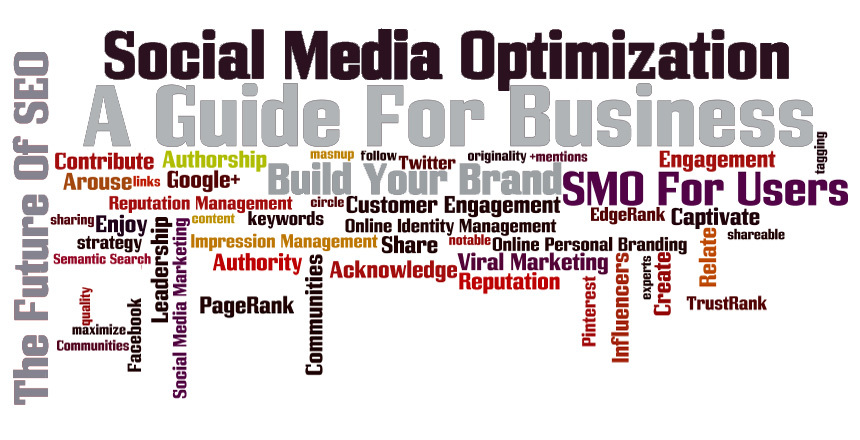
This Complete Guide to SMO for SEO and The Future of Search, is
actually an in-depth Pilot Episode for a comprehensive series of
articles I will be expounding on, covering all of the following closely
related topics. My goal through writing this guide is to give you as
complete a basic knowledge of this field as can be fit in a one time
reading, in that respect this is a broad spectrum crash course of a
depth that I do not believe you will acquire anywhere else in a single
session.
Social Media Marketing
Viral Marketing
Customer Engagement
Online Identity Management (OIM)
Online Image Management
Online Personal Branding
Personal Reputation Management
Impression Management
Search Engine Marketing (SEM)
Authorship and Relationship with Social Media
Semantic Search
PageRank and Google Search
PageRank in Google+
Google+ Optimization for SEO
Personalized Search
EdgeRank
TrustRank
So stay tuned for these important topics to see your business grow.
⑩ Let's travel 10 years into the future and see where Google Search is going.
▔▔▔▔▔▔▔▔▔▔▔▔▔▔▔▔▔▔▔▔▔▔▔▔▔▔▔▔▔▔▔▔▔
To end on an interesting note, let's watch what +Matt Cutts imagines in the future of Google:
Matt: I would expect Google to be... maybe not sentient, but pretty far along the path of being a good assistant.
I can imagine multimodal input: Maybe you have a phone, but you
probably have an ear piece, you might have some Google Glass... at that
point you have augmented reality, not just a video overlay. A lot of
great sensors, so... voice input... in theory there could be a brain
interface, so you could be having a dialog where some of it is audible
and some of it is not...


 Google's official position on webmaster best practices really hasn't
changed much over the years. What has changed is the search engine's
ability to enforce these guidelines through improved algorithms. The
implementation of Panda, Penguin, and Hummingbird has had a profound
impact on the SEO landscape.
Google's official position on webmaster best practices really hasn't
changed much over the years. What has changed is the search engine's
ability to enforce these guidelines through improved algorithms. The
implementation of Panda, Penguin, and Hummingbird has had a profound
impact on the SEO landscape.